
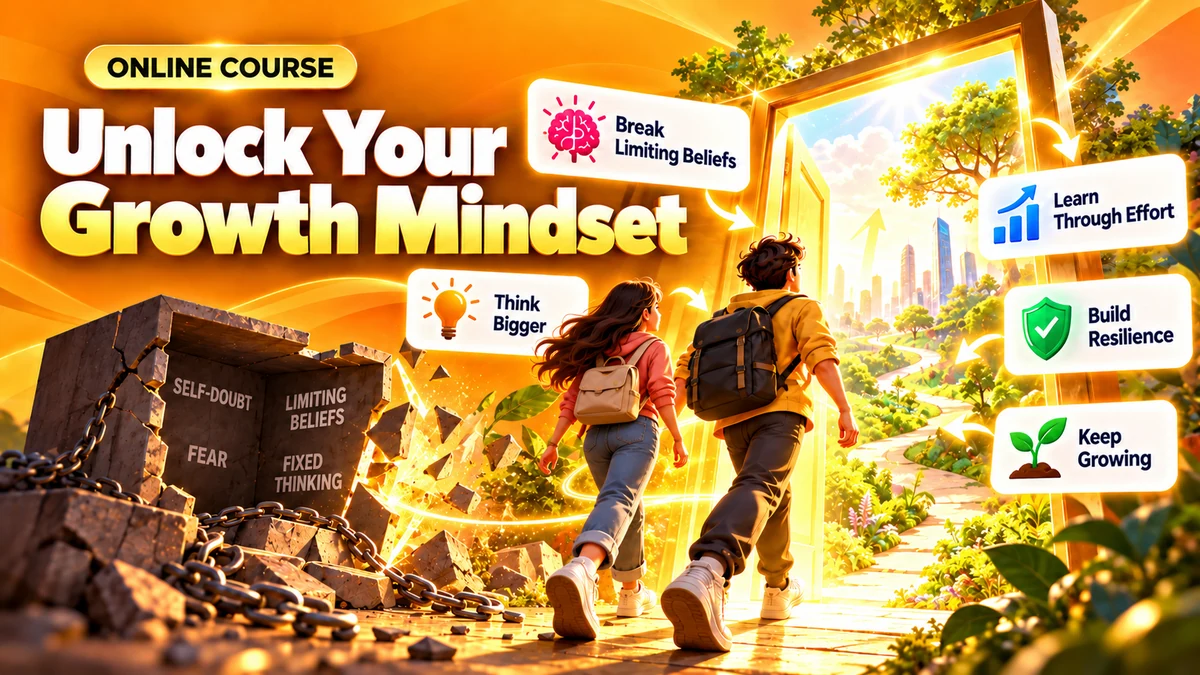
What you’ll be able to do
Learn a more flexible way to think about effort, feedback and learning.
- Explain the course's distinction between fixed and growth-oriented beliefs about abilityLessons 1–3
- Recognise how praise, labels, challenge, failure, and criticism can influence the way effort is interpretedLessons 4–9
- Reframe a setback as information for review without treating failure as proof of personal worthLessons 8–9
- Use more specific language about effort, strategy, practice, support, and next stepsLessons 11–14
- Design a deliberate-practice approach for a skill or area of learningLesson 14: "Deliberate Practice"
- Identify ways to support a growth-oriented culture in relationships, teaching, parenting, or ongoing learningLessons 15–18
Certificate of Completion
Get a certificate when you finish, to show what you have learned.
Complete all lessons in the course
Who this is not for
This course may not be right for you if:
- You are looking for therapy.
- You want guaranteed success from positive thinking.
- You need a substitute for specialist educational or professional support.
About this course
This course introduces growth mindset as a practical way to think about learning, effort, feedback, setbacks, and developing skills over time. It does not ask you to pretend that every challenge is easy or that effort guarantees success. Instead, it focuses on how the meaning you assign to difficulty can affect the next choice you make. The first module explores fixed and growth thinking, beliefs about talent, how mindsets form, and the effect of praise and labels. You will be invited to notice the language you use about your own abilities without turning that observation into a judgement about your character. The second module applies the ideas to challenges, failure, criticism, other people's success, effort, and strategy. The emphasis is on treating setbacks as information to examine, while still recognising that circumstances, resources, support, and starting points matter. The final module covers inner language, deliberate practice, growth cultures, relationships, teaching, parenting, and lifelong learning. Across 18 lessons, the course combines explanations, reflection prompts, quizzes, and exercises that help turn growth-oriented ideas into repeatable practice. This is educational self-development content, not therapy or a diagnosis. It does not promise that every goal will be achieved or that a change in language can remove real-world barriers.
Frequently asked questions
Quick answers before you start.
Does a growth mindset mean believing I can achieve anything?
No. The course presents growth-oriented thinking as a way to examine learning, effort, strategy, feedback, and support. It does not promise that every outcome is possible or solely under your control.
Is this course about ignoring failure?
No. The lessons use setbacks and criticism as material for review and learning while avoiding the claim that every setback is beneficial.
Can I use this course for work or study?
Yes. The modules discuss challenge, effort, deliberate practice, feedback, relationships, teaching, and lifelong learning. Apply the ideas to your own context rather than treating them as a universal formula.
Is this course therapy?
No. It is educational self-development content and does not assess, diagnose, or treat mental health conditions.
Ready to keep learning and growing?
Use setbacks and feedback to keep learning, at work, at home or in study.
This course is for general educational self-development only. It is not therapy, medical advice, psychological assessment, diagnosis, or treatment. It does not guarantee academic, career, relationship, or personal outcomes. Seek appropriately qualified support where your circumstances require it.