
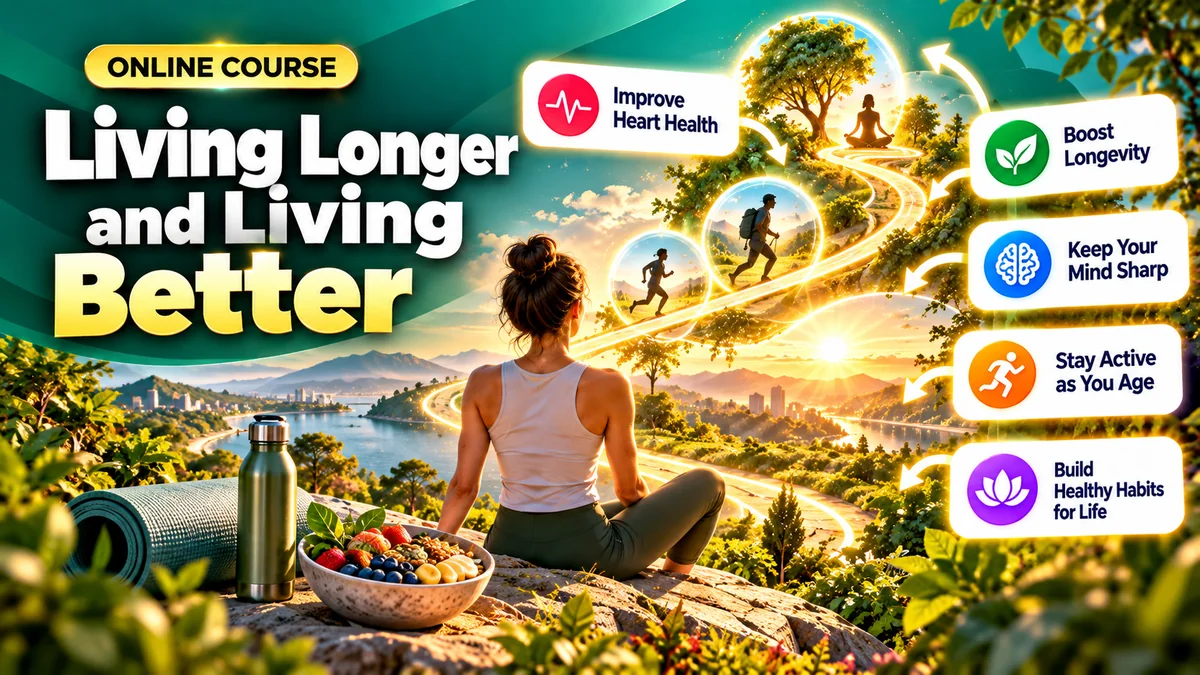
What you’ll be able to do
Learn what shapes healthy ageing, then choose a few practical areas to work on.
- Distinguish lifespan from healthspan and explain why the distinction mattersLesson 1
- Separate lifestyle influences from factors outside personal controlLessons 2–3
- Review movement, food, sleep, stress, connection and cognitive-health topics togetherLessons 8–14
- Create a personal baseline before choosing changesLesson 15
- Build sustainable routines and track them without making measurement the whole projectLessons 16–18
- Assemble a long-term health plan from the course's practical subjectsLessons 20–21
Certificate of Completion
Get a certificate when you finish, to show what you have learned.
Complete all lessons in the course
Who this is not for
This course may not be right for you if:
- You want a guaranteed way to live longer.
- You want a condition-specific health plan.
- You want extreme routines or a single "perfect" lifestyle.
About this course
Thinking about the future can become abstract quickly. "Be healthier" is too broad to guide a Tuesday, while a long list of rules is difficult to sustain. A useful approach starts by separating the ideas involved and choosing a few practical areas to work on. This course begins with lifespan and healthspan, then explains what healthy ageing means and how genetics and lifestyle fit into the picture. Module 2 looks at the major subjects that shape the course's long-term health framework: movement, nutrition, sleep, recovery, stress, social connection and cognitive health. Module 3 turns those topics into planning work. You review a personal baseline, choose small changes, build sustainable routines, track without becoming consumed by measurement, examine common myths and assemble a long-term health plan. The course is not a promise of extra years, a prevention programme or a substitute for professional support. It is a structured education course about the habits and concepts people commonly associate with living well over time. You decide which ideas fit your circumstances and which questions need a qualified professional. It suits adults who want a broad, balanced framework for thinking about long-term wellbeing rather than another extreme routine.
Frequently asked questions
Quick answers before you start.
How much time does it take?
Twenty-one lessons with practical reflection and planning tasks.
What is the difference between lifespan and healthspan?
The course uses the distinction to separate length of life from the quality and capability of the years lived.
Does the course prescribe a diet or exercise plan?
No. It covers broad subjects and helps you create a realistic personal plan.
Do I need to track health data?
No. Tracking is discussed as an optional way to notice patterns, not as a requirement.
Is this medical advice?
No. It is general education and does not diagnose, prevent or treat a condition.
Ready to plan for healthier years ahead?
Choose a few small, realistic changes and build them into a long-term plan.
Educational material only. This course is not medical advice, diagnosis or treatment and does not replace qualified professional support.