
What you’ll be able to do
Learn the ways of thinking that help people turn ideas into action.
- Evaluate any opportunity against the five CENTS criteria before investing timeLesson 5
- Make the consumer-to-producer shift and think in value created, not hours soldLessons 6–7
- Spot market gaps in everyday frustrations, complaints and workaroundsLesson 9
- Score and shortlist opportunities with a framework instead of enthusiasmLessons 14–15
- Escape analysis paralysis using commitment devices that force a first actionLessons 16–17
- Run a first-dollar experiment — the smallest possible test of whether someone will payLesson 18
Certificate of Completion
Get a certificate when you finish, to show what you have learned.
Complete all lessons in the course
Who this is not for
This course may not be right for you if:
- You want get-rich content. The course argues wealth follows value creation; the modules are about building, not windfalls.
- You're looking for a step-by-step launch plan. This is the thinking layer; the idea, MVP and launch courses here are the steps.
- You've already built and shipped businesses. The models will be familiar; the value is at the start of the journey.
About this course
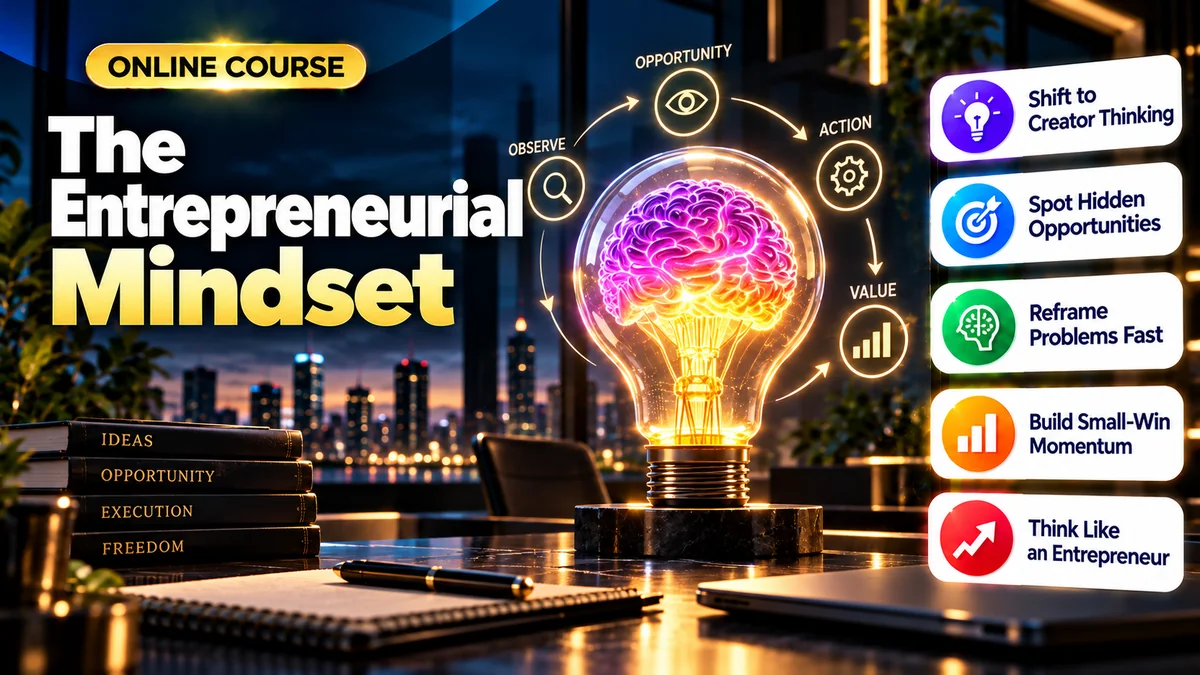
Plenty of people have business ideas. What separates the ones that happen from the ones that stay in the pub conversation isn't genius or funding — it's a set of mental models about where value comes from, plus the habit of acting before certainty arrives. This course teaches the models and then the habit. Module 1 reframes how you see the whole game: why the conventional work-save-retire path is slow by design, value creation as the only thing that matters, zero-to-one thinking over copycat competition, the CENTS framework for separating real businesses from glorified hobbies, the mental models of the Personal MBA, the consumer-to-producer identity shift, and a personal builder's blueprint to close the module. Module 2 trains opportunity recognition: spotting market gaps in everyday frustrations, 10x thinking and why incremental fails, the monopoly mindset of being the only real option, a pain-point radar for where money hides, the value equation, scoring opportunities, and a shortlist you'd actually act on. Module 3 closes the gap to doing: the analysis-paralysis trap, commitment devices that force action, a first-dollar experiment as the simplest possible start, what risk actually is (and isn't), the MVP mindset, building momentum, and a written action plan. Twenty-one lessons at five minutes each, with a task per lesson. It suits you if the thinking is done and the doing keeps not starting.
Frequently asked questions
Quick answers before you start.
How much time does it take?
Twenty-one lessons at five minutes each, plus a task per lesson. The final lesson produces a written action plan, not just a feeling of motivation.
What are CENTS and the Personal MBA?
Named frameworks and reading traditions the course teaches from scratch — no prior reading needed.
Is this motivational or practical?
Neither, as it happens: it's cognitive. Mental models, scoring frameworks, commitment devices — the tools that make action rational rather than forced.
Is this the same as Find Your Profitable Idea?
No. That course tests a specific idea with real people. This one trains how you see opportunities at all. The natural order is this course, then that one — or either alone, honestly.
I've read the books these frameworks come from. Still worth it?
Only if the reading hasn't turned into action — Module 3 is entirely about that gap.
Ready to stop thinking and start doing?
Learn to spot good ideas and take your first real step, with a written plan to follow.