
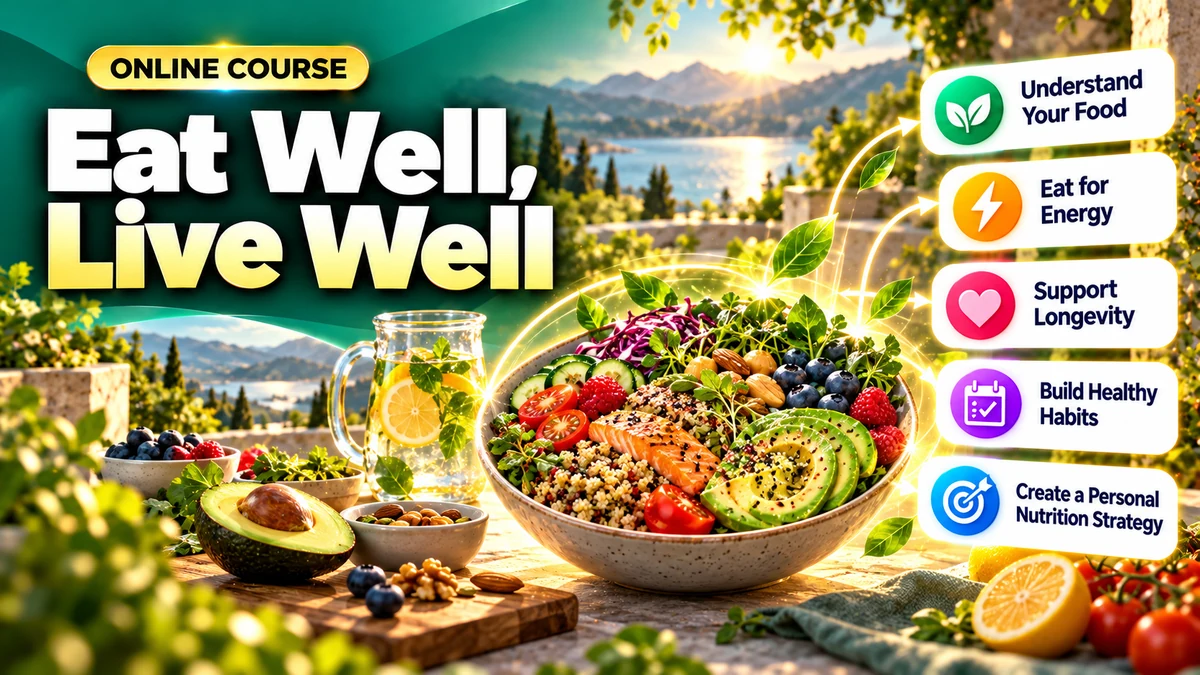
What you’ll be able to do
Learn how food works and build a way of eating that fits your real life.
- Explain the roles of carbohydrates, protein, fats, vitamins and mineralsLessons 11–14
- Build meals around food choices that suit your energy and routineLessons 1–2, 20
- Understand how meal timing, alcohol and sleep interact in everyday planningLessons 6–7
- Compare broad eating patterns without treating one diet as universalLesson 4
- Plan simple meals for busy days, travel and eating outLessons 20–22
- Create a personal nutrition strategy that can be adjusted over timeLesson 24
Certificate of Completion
Get a certificate when you finish, to show what you have learned.
Complete all lessons in the course
Who this is not for
This course may not be right for you if:
- You want a therapeutic diet or condition-specific nutrition plan.
- You want rigid rules, calorie targets or a prescribed menu.
- You want food advice detached from your preferences, schedule and circumstances.
About this course
Eating well is difficult to reduce to one perfect menu. Work schedules change, food preferences differ and advice often arrives as a list of rules that is hard to use on an ordinary Tuesday. A better starting point is understanding what food does and building a way of eating that fits your actual life. This course begins with the fundamentals: macronutrients, micronutrients, hydration, food processing and the way meal timing can fit into a day. It then moves through protein, fats, food for the brain, the relationship between food and sleep, and the broad patterns behind well-studied approaches to eating. The final module is practical: why rigid diets tend to be difficult to sustain, identity-based habits, simple meal planning, busy schedules, mindful eating, social situations, eating out, travel and a personal nutrition strategy. The course does not prescribe one diet or ask you to turn food into a moral test. It gives you concepts to work with, questions to ask and planning tools to adapt. Every lesson is designed to connect understanding with an ordinary decision, such as what to prepare, what to keep available or how to handle a meal away from home. It suits adults who want a clearer relationship with food and a flexible set of habits they can practise.
Frequently asked questions
Quick answers before you start.
How much time does it take?
Twenty-one lessons with practical tasks that apply the concepts to your own meals and routines.
Does the course prescribe a specific diet?
No. It compares broad patterns and focuses on food literacy, planning and adaptable habits.
Do I need to count calories or track every meal?
No. Tracking is not the centre of the course.
Does it cover busy schedules and eating out?
Yes. The final module covers planning, workdays, travel, social situations and mindful eating.
What if I have a personal dietary or health concern?
Speak with a qualified professional. This course is general education and is not a substitute for individual advice.
Ready to make eating well feel easier?
Plan simple meals around your own life, with no strict rules or calorie counting.
Educational material only. This course is not medical advice, diagnosis, treatment or a condition-specific nutrition plan and does not replace qualified professional support.